
Supplier of Precision Components – India’s manufacturing sector is rapidly evolving, with a strong emphasis on precision engineering and technologically advanced tools. As industries like automotive, aerospace, railways, and heavy machinery continue to grow, the demand for reliable suppliers of precision components and heavy engineering tools has surged. Companies operating in this space must meet high standards of quality, innovation, and delivery efficiency. From CNC machined parts to hydraulic assemblies and forged industrial tools, these components form the backbone of critical industrial operations. India is increasingly becoming a hub for global engineering exports, driven by quality‑focused manufacturers who blend traditional industrial know‑how with advanced production methods. Indian engineering firms are now recognized for their ability to deliver bulk quantities without compromising precision, making them trusted partners for both public and private sector clients. With the government’s “Make in India” push and rising foreign investments, India’s heavy engineering and precision tools sector is poised for greater heights, serving both domestic industries and global markets that demand reliability and cost efficiency.
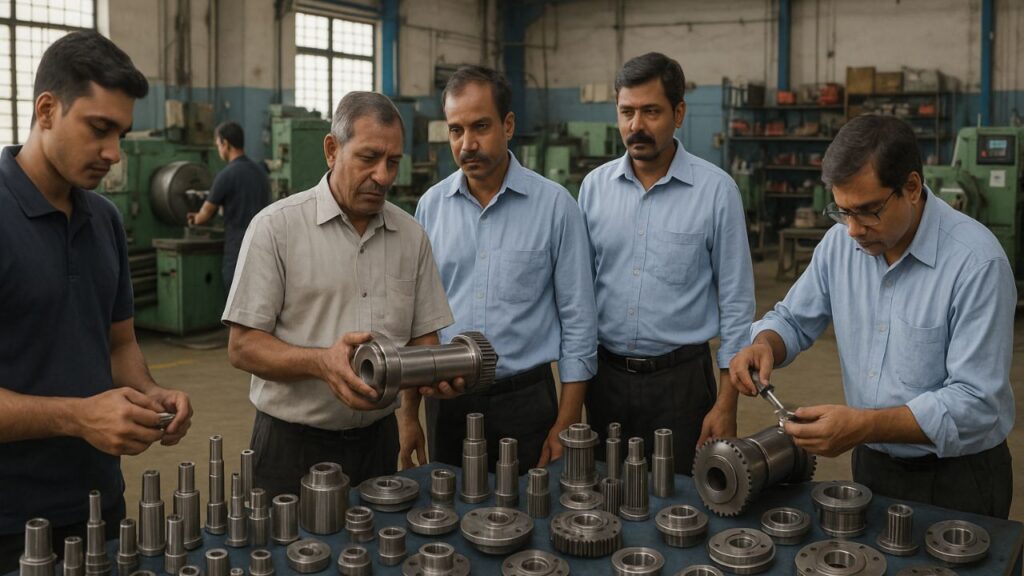

Why Precision Components Are Crucial to Modern Industries
Precision components play an integral role in the functioning of nearly every industrial system, from automotive engines and power turbines to medical devices and defense machinery. Their reliability determines not just product quality but also operational safety and lifecycle durability. Modern manufacturing relies on micron‑level tolerances, made possible through advanced CNC machining, CAD‑based designs, and rigorous quality testing. Companies investing in these technologies are at the forefront of India’s industrial revolution. Precision tools enable seamless automation, reduced energy consumption, and fewer system breakdowns. According to IMARC Group, the India precision engineering market size reached USD 500 Million in 2024 and is expected to grow significantly through 2033. These parts must meet global standards like ISO and DIN to serve export markets. As industries demand leaner production and zero‑defect outputs, precision engineering has moved from a specialized niche to a standard requirement across verticals, making suppliers in this space invaluable partners for growth.

The Growing Market for Heavy Engineering Tools in India
India’s heavy engineering sector is undergoing robust expansion, thanks to massive infrastructure projects, industrial modernization, and defense manufacturing initiatives. Heavy engineering tools such as hydraulic presses, lathe machines, cutting tools, gearboxes, and heavy‑duty fittings are essential for manufacturing, power generation, mining, and transport. As reported in “Demand for high‑precision machining tools is growing in India”, there is an increasing need for high‑precision machining tools to produce components that meet tight tolerances and stringent quality norms. These tools must not only be built well but also supported with custom fabrication, on‑site installation, and long‑term maintenance support. The focus is on engineering excellence, adherence to timelines, and robust logistics networks to meet bulk industrial demand. With rising energy needs and the emergence of smart factories, heavy engineering tools are evolving into smarter, more efficient versions, supported by IoT integration and digital monitoring solutions. This shift requires suppliers to continuously upgrade and invest in the latest tech.

Choosing the Right Supplier: What Industries Should Look For
Selecting a reliable supplier for precision components and heavy engineering tools requires a close assessment of several key factors: quality certifications (like ISO 9001), manufacturing capacity, turnaround time, client references, and after‑sales service. Industries must evaluate whether the supplier can produce custom parts and handle high‑volume orders without delays. A supplier’s experience with multiple sectors—such as automotive, steel, oil & gas, and power—also indicates versatility and technical know‑how. As described in “How CNC Machining is Driving India’s Manufacturing Growth” by Sahil Singh, India is rapidly emerging as a global manufacturing powerhouse, fueled by advancements in CNC machining, highlighting the importance of suppliers who integrate digital quality control systems, offer flexible batch sizes, and have in‑house R&D capabilities. Transparency in pricing, warranty support, and compliance with industry regulations are other essential considerations. In India, many suppliers have moved from being simple vendors to becoming long‑term partners in product innovation, co‑design, and JIT (Just‑in‑Time) supply models. This evolution ensures supply chain reliability and operational continuity for client industries, especially in critical manufacturing domains.
 SK Enterprises Is Known for Timely Delivery, Quality Assurance, and B2B Industrial Support
Future Trends in the Indian Engineering Components Sector
The future of India’s engineering components sector is being shaped by digital transformation, green manufacturing practices, and global collaboration. AI‑powered production planning, predictive maintenance systems, and smart warehousing are streamlining operations for forward‑thinking suppliers. The rise of Industry 4.0 is pushing manufacturers to integrate sensors, automation, and real‑time monitoring in both component manufacturing and heavy tool usage. Sustainability is another defining trend, with companies adopting green machining techniques and eco‑friendly production processes. Export growth is also anticipated, especially to regions like Southeast Asia and Africa, where Indian engineering products are competitively priced and highly durable. The government’s Production‑Linked Incentive (PLI) scheme and support for MSMEs is also encouraging smaller precision manufacturers to scale up and adopt global standards. These changes are not just reshaping India’s internal supply chain ecosystem but are also enhancing its reputation as a global manufacturing powerhouse in the precision and heavy engineering domain.
